
Why Pumps Fail
Common Causes and Prevention Strategies
Pumps are the unsung workhorses behind industrial systems, food processing plants, and critical fluid processes. But when a pump fails unexpectedly, the consequences can range from production delays to costly repairs and lost revenue. Understanding why pumps fail — and knowing how to prevent those failures — empowers maintenance teams to maximize equipment life and optimize system performance.
In this article, we’ll break down the most common reasons pumps fail and share practical, proactive strategies to keep yours running longer and more efficiently.
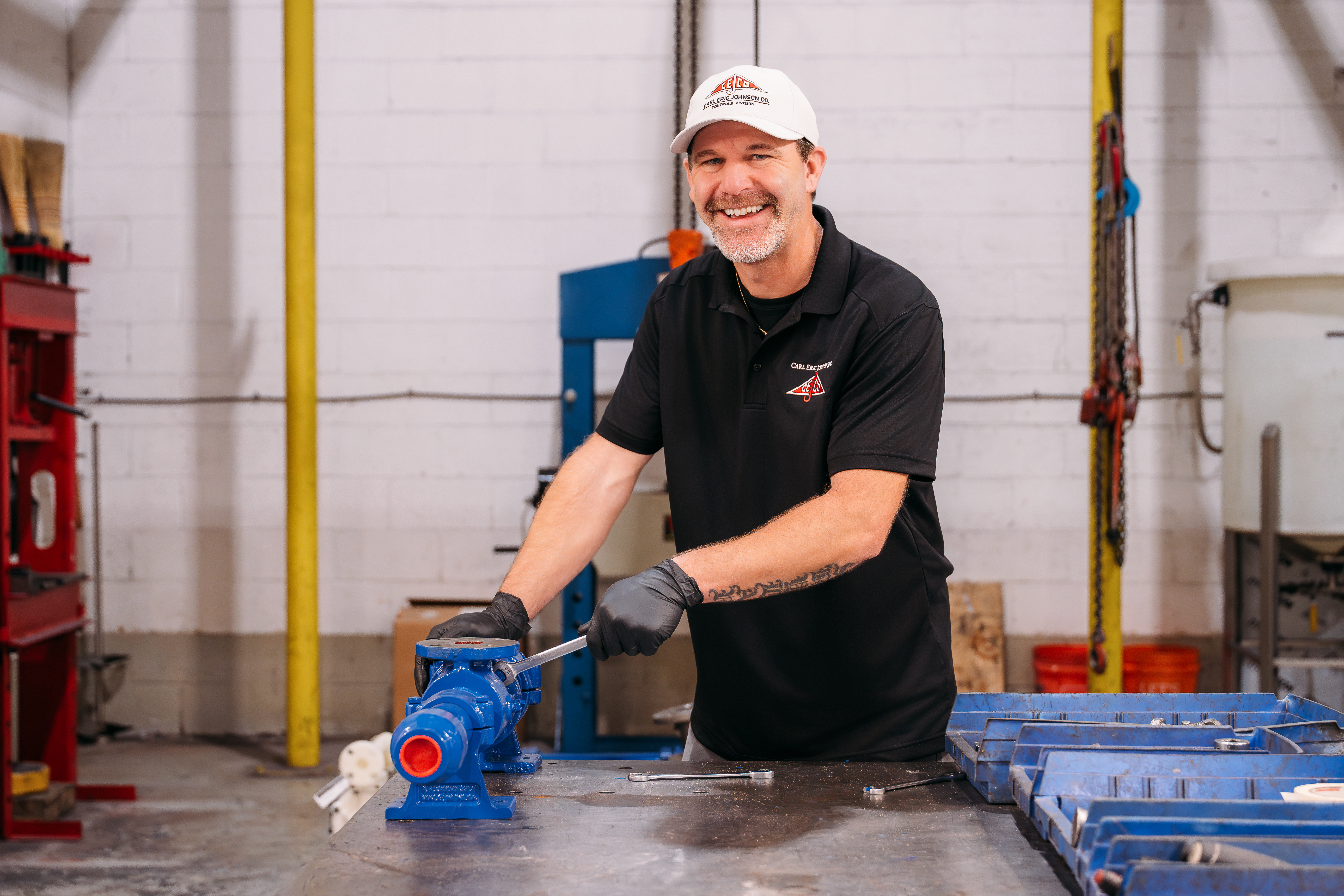
By: CEJCO Services Division
1. Improper Installation
Why it fails: Misalignment, incorrect piping setup, and poor foundation support can introduce stress and vibration, accelerating wear.
How to prevent it:
- Follow manufacturer installation guidelines.
- Ensure proper alignment with precision tools.
- Support piping so it doesn’t transmit loads to the pump.
2. Cavitation
Why it fails: Cavitation occurs when the pump loses prime or experiences low inlet pressure, causing vapor bubbles to form and collapse — eroding metal surfaces and reducing performance.
How to prevent it:
- Check NPSH (Net Positive Suction Head) requirements.
- Minimize suction lift and avoid suction line restrictions.
- Ensure proper fluid levels and avoid excessive velocities.
3. Seal and Packing Failures
Why it fails: Leaks happen when seals wear out, are improperly installed, or the pumped fluid attacks the seal material.
How to prevent it:
- Use the correct seal type for the application.
- Install seals with care and proper lubrication.
- Monitor and replace seals before catastrophic failure.
4. Bearing Wear and Failure
Why it fails: Bearings are essential for smooth operation. Contamination, lack of lubrication, high loads, or misalignment can cause premature failure.
How to prevent it:
- Establish a regular lubrication schedule.
- Use quality bearings suited to the application.
- Check for misalignment and excessive loads during inspections.
5. Electrical & Motor Issues
Why it fails: Motors can overheat, fail insulation, or suffer from voltage problems — leading to pump downtime.
How to prevent it:
- Perform periodic motor electrical testing (megger, motor current analysis).
- Ensure proper voltage and starter protection.
- Keep motor cooling pathways clear of dust and debris.
6. Operating Outside Design Specs
Why it fails: Pumps run inefficiently when they aren’t sized or selected correctly — leading to overheating, vibration, and wear.
How to prevent it:
- Confirm system requirements before selecting a pump.
- Don’t operate too far from the Best Efficiency Point (BEP).
- Review system changes that could affect pump duty.
7. Lack of Preventive Maintenance
Why it fails: Pumps that aren’t routinely checked will develop problems that go unnoticed until failure occurs.
How to prevent it:
- Implement a PM program with digital checklists.
- Collect vibration, temperature, and flow data regularly.
- Use predictive tools like vibration analysis and thermography.
8. Contamination & Fluid Issues
Why it fails: Abrasive particles, entrained gases, or incompatible fluids can degrade internal pump components.
How to prevent it:
- Use proper filtration and strainers.
- Regularly monitor fluid condition.
- Choose pump materials suitable for the fluid.
Conclusion
Pump failures don’t have to be inevitable. With careful installation, correct selection, regular maintenance, and attention to system conditions, you can dramatically improve pump reliability — boosting uptime and reducing costs.
CEJCO Services is here to help you with expert pump inspections, preventive maintenance planning, and troubleshooting support. If you want a pump assessment or proactive maintenance program, contact us today!